I grew up in Switzerland as the son of evangelical missionaries, just a stone’s throw from the ski resort of Crans-Montana, which recently saw a horrific fire on New Year’s Eve. Forty young people were killed in a club, and more than a hundred were seriously burned, many now distributed across Switzerland and Europe in burn centers.
Looking at the faces of the young people who died, I felt overwhelming sadness. They reminded me of my teenage grandchildren—beautiful, hopeful faces. I still read the Swiss newspapers. I grew up there, and I speak French. One detail emerging from multiple reports struck me deeply: when the fire started and accelerated rapidly, many young people did not immediately run for safety.
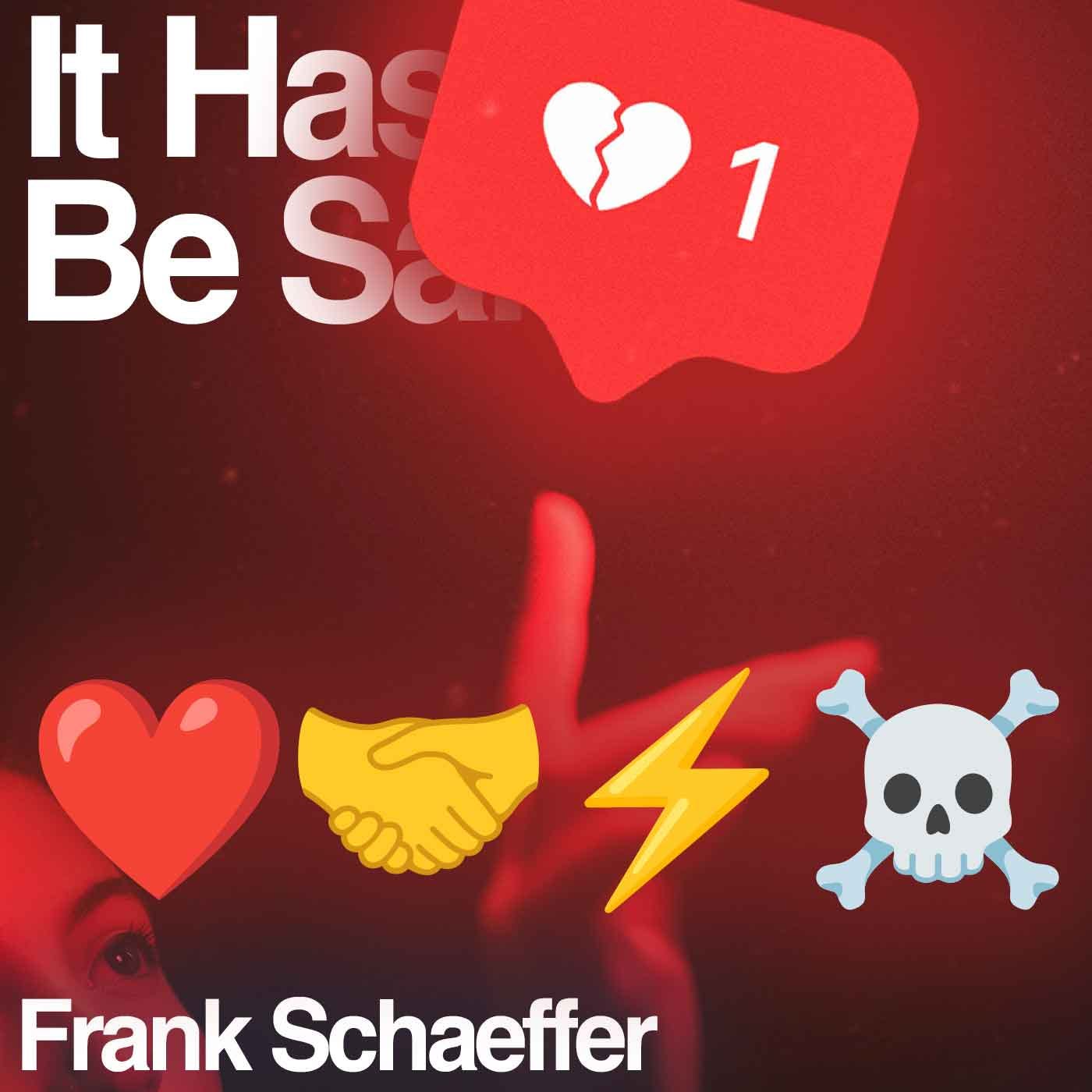
Instead, as so often happens now at concerts and public events, people turned around, pulled out their phones, and began filming. They took pictures and videos—perhaps assuming something dramatic or “share-worthy” was happening, something they would later post online. That delay cost lives.
A few days later, I read a column by David Brooks in The New York Times titled “We’re Living Through the Great Detachment.” [Gift Link] I quote Brooks in my new book, The Gospel of Zip, because his thinking mirrors what I have been trying to articulate for years.
I have spent much of my recent life deeply involved in caring for my grandchildren—just as I was with my older grandchildren, now adults. This has been one of the great pleasures of my 56-year marriage with my wife, Genie. I talk about this in The Gospel of Zip, which I recorded in full and made freely available online—not to sell anything, but to share something I believe matters.
Brooks’ essay captures a tragedy that feels emblematic of our moment: algorithm-trained minds so detached from lived experience that people film the fire that will kill them instead of running from it.
Brooks writes:
“Love is a motivational state. It could be love for a person, a place, a craft, an idea, or the divine. But something outside the self has touched something deep inside the self and set off a nuclear reaction.”
Later, he quotes psychologist Erich Fromm:
“The deepest need of man is to overcome his separateness, to leave the prison of his aloneness.”
Brooks paints images of people fully engaged: a kissing couple, a carpenter absorbed in his craft, a scientist gazing at the cosmos, a nun in prayer. These are people participating in life, not holding it at arm’s length through a phone. To be loveless, Brooks writes, is to live on autopilot. Love fuels full engagement.
He quotes philosopher Susan Wolf, who argues that a meaningful life requires caring deeply—being gripped, excited, interested, engaged. In other words: loving something.
One way to live, Brooks says, is to walk through life open-hearted, finding things to be wholehearted about.
This aligns with what study after study has shown. The Harvard Longevity Study found that the happiest and longest-lived people were those most deeply connected to others. Brooks puts it this way: “If you want to know me, know the things I love.” He lists his family, friends, places, passions.
I do something similar in The Gospel of Zip. I know who I am and why I’m here. I am a grandfather.
Recently, when Genie traveled to visit her sisters, I spent five days caring for my granddaughter Nora, who was home sick with strep. If I had missed that week, I would have missed one of the best moments of my life. Sitting in a doctor’s office, Nora said, “Thank you for taking me.” I replied, “There’s no place I’d rather be than with you.” She said, “There’s no place I’d rather be than with you, Ba.”
She cooked me omelets. We played cards. I read to her. When I came home from a medical appointment, she walked over carrying chopped blueberries and nectarines she had prepared for me as a get-well gesture. I never have to ask what the meaning of life is. I know.
Grandparents do something essential: they reassure children that the sky is not falling. Yes, the climate is a mess—but so was World War II. So was the Black Death. People still fell in love. People still had children. Life goes on. Live.
Brooks documents how Americans are increasingly detached: fewer children, fewer friends, less community involvement, declining religious participation, declining patriotism. According to surveys, the only value that has risen since the late 1990s is making money.
Brooks calls this The Great Detachment—as if people are watching their own lives from a distance, filming instead of living. That detachment proved fatal in the fire, just as it proves corrosive everywhere else.
You can build a culture around loving commitments, Brooks writes, or you can build a culture around individual autonomy—but you can’t do both. Over the past sixty years, we chose autonomy, and the result has been achievement anxiety, loneliness, and disconnection.
This is not a partisan issue. Making love, marriage, family, and connection into political battlegrounds is deeply foolish. I’ve had interesting careers. I’m grateful I never prioritized money over living.
Marriage isn’t for everyone, Brooks acknowledges, but on average married people report greater happiness. Studies consistently show that connection—not status, wealth, or autonomy—predicts well-being. Loneliness is devastating. Love is life-giving.
The paradox is this: the constraints we choose—the obligations of love—are the very things that set us free. That is the message of The Gospel of Zip.
Recently, as Genie returned home from yoga after recovering from a broken arm, I was lying on the floor listening to Tristan und Isolde. Our dog Zip heard the door before I did and ran to greet her. I felt my entire interior life shift as the love of my life walked through the door. After 56 years together, that connection still transforms everything.
Food means nothing if you haven’t made it for someone else. Life only comes alive through direct connection. Detachment—algorithmic, mediated, loveless—is the curse of our age.
There was a fire. People filmed it. That is the metaphor.
I grieve for those young people and for their families. And I believe this with everything in me: if you want joy, love fiercely. Connect deeply. Put relationship first.
Happy New Year.